
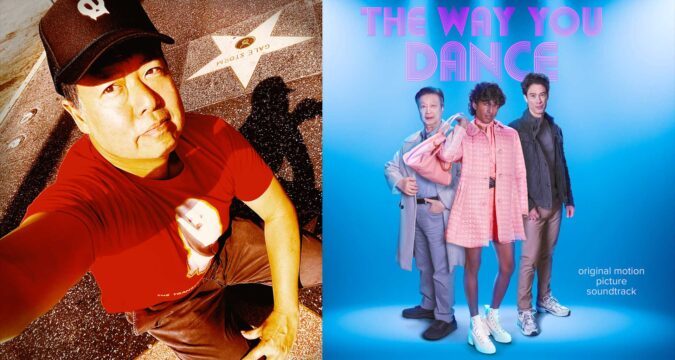
As Pride Month 2026 comes to a spectacular close, trailblazing filmmaker Quentin Lee has officially dropped the highly anticipated soundtrack for his upcoming feature, The Way You Dance. The album boasts a vibrant, genre-bending lineup featuring original music by Lee, composer Lora Chow, and an eclectic ensemble of global musical artists.
In an exclusive interview, CHOPSO sits down with Lee to pull back the curtain on their unique creative process—specifically, how they locked in and produced the film’s sonic identity before principal photography even wrapped late last year.
Distributed by 604 Records—Canada’s powerhouse independent label—the soundtrack is out now worldwide as of June 26, 2026.
Turn up the volume and listen here!
Tell us about the process of producing the soundtrack for The Way You Dance. How much music did you have to lock down before starting principal photography?
QL: Previously, I’ve had experience of producing the soundtracks for my features since The People I’ve Slept With in 2009. When I realized that I am making a dance movie, I knew I must lock down a good number of tracks before movie began so that my choreographer Randi Liberman could have a good choice of tracks to choose from.
I remember we dropped a call for music for you last year. Were you able to get some interest from that call?
QL: First, thank you for doing the call. It was slow at first so I asked my friend Simon Tam of The Slants to help. Then my publicist Winnie Wong also put the call out. I was in Hong Kong and I met with my longtime friend / collaborator DJ Stonedog and ended up signing five of his tracks, including one from his AI artist Luca Ferrano. I actually already placed Stonedog’s “Big Gay Anthem” that I’ve really loved in my production of the 2013 feature Big Gay Love from director Ringo Le. I know good music is timeless… so I licensed “Big Gay Anthem” again for my feature.
I also want to mention that Nicholas Brendon was amazing to work with on Big Gay Love and I’m still really shocked and saddened that he passed earlier this year.
Tell us more about the other artists you’ve signed.
One of the first songs that came to me after Stonedog’s were my former teacher Kumari Suraj’s “Desi Girl Chant” and “Disco Housewife.” Because of my queer South Asian protagonist, I felt it was important to have that music representation:
Winnie my publicist referred me Shayne Stolz, a queer Toronto-based pop artist that I dug and ended up including two of his songs “Shine On” and “Be Me:”
Through Winnie, I also met Mark Tara, such a unique queer musical artist from Toronto, who hosted the world premiere Q&A for my feature documentary release of Rez Comedy. When I listened to two of their tracks, “Number One” and “Different Love,” I signed them too:
Through Simon Tam who put out a call for me, I signed DJ Seoul Train, aka Jun Seok Kim, an adopted Dutch-Korean musician based in London:
Along with San Francisco’s Son of Paper, aka Kyle Shin:
And Toronto’s DJ SoftSPKN, aka Andrea Chow:
When I was in Toronto for the release of Rez Comedy, I was taking classes from artist / dancer Oleg Kasynets. When I listened to his music, I immediately fell in love with his song “Something New”:
I also found out that my son’s good friend’s dad was a musician who goes by the pseudonym Earl Chuck and ended up signing two of his songs:
Before I even started production, I’d already signed 24 tracks and had them ready for Randi when she got to the set. She dove right into the songs, making her own selections and mixes of what she wanted to choreograph.
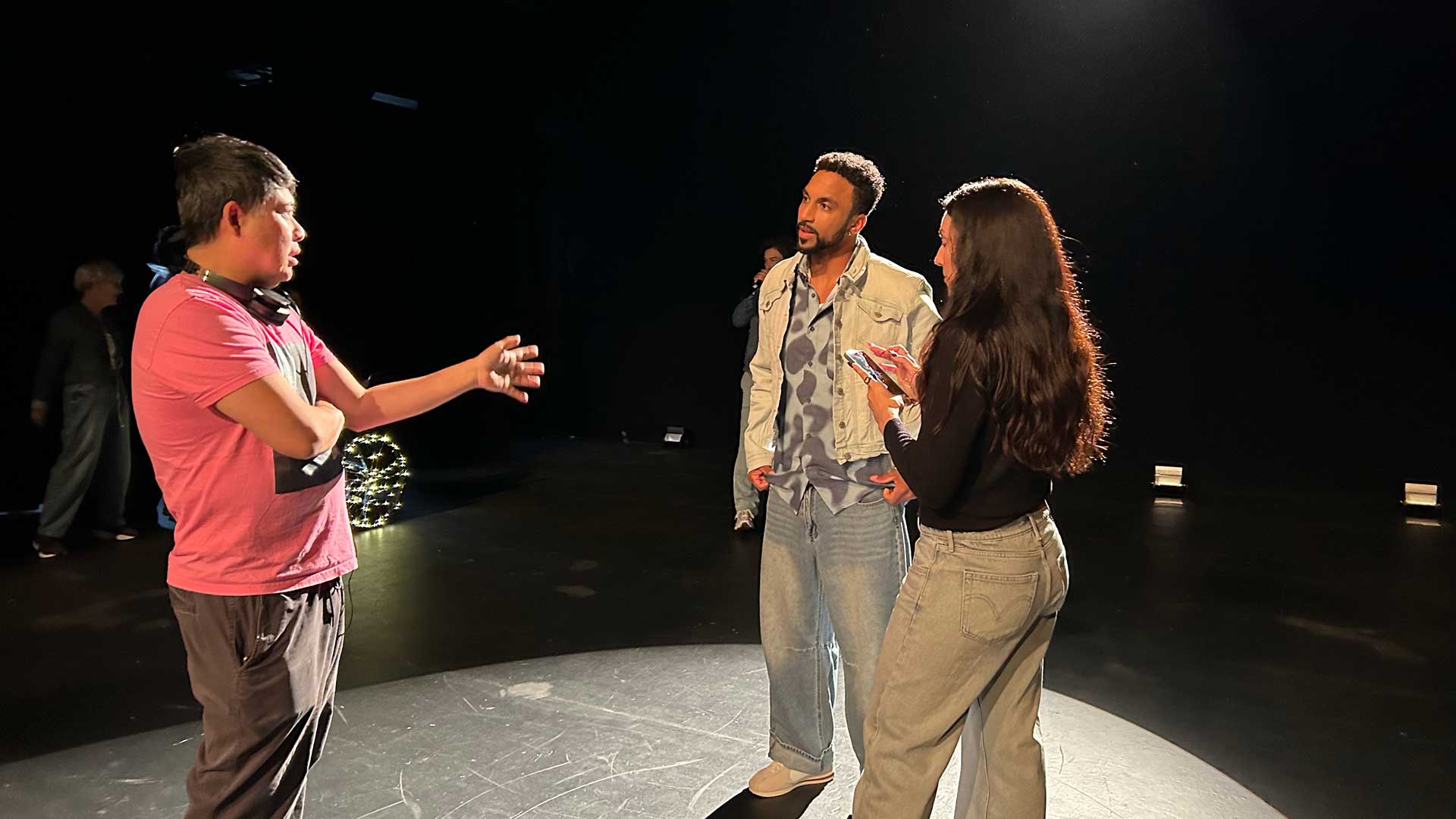
Quentin Lee (left) and Randi Liberman (right) discussing with actor Jordan Réti
I notice Randi was also the co-director… tell us about that.
When I was directing White Frog, I felt like the choreographer, Kyle Hanagami, worked a bit too much in a bubble, only leaving his trailer to set up the dance sequences on set. I really wanted to change that dynamic with Randi by involving her in the collaboration across non-musical scenes as well, even though she was primarily the choreographer. In a lot of dance movies and musicals, the numbers feel totally random and disconnected from the plot. I really wanted our dance sequences to integrate organically into the storytelling. Plus, I was also setting Randi up to direct me in the opening musical number where I had to perform.
Why did you decide to create a song and put it in the opening of your movie? Was it always planned?
One night in early 2025, while taking a break from writing the script for The Way You Dance, inspiration struck to write a song. I had the idea for a dance track but put it aside for a few months. Later, I met musician and composer Ernie Lee at a friend’s daughter’s birthday party. I told him I had written a song I wanted to perform, even though I had zero singing or recording experience. He took a look at it, became interested in collaborating, and we ended up recording the track in the summer of 2025.
I still had no idea what to do with the song until the original artist I wanted to hire for The Way You Dance asked for too much money, and sorting out the music rights became incredibly complicated. I realized I could use my own song—and perform it myself—to help save the film’s budget. So, I took the plunge, cast myself as the artist, and used my track, which also gave me the perfect excuse to shoot a music video.
Since I’d been a student of hip-hop dance for two decades and had grown increasingly interested in performing, I figured, why not? If I failed artistically, I’d have no one to blame but myself!
And you also had a composer for the movie who’s part of the soundtrack?
Yes! I actually met Lora Chow through the Yale alumni network. I’d heard her music a couple of years before even thinking of The Way You Dance, and I already knew I wanted to work with her.
When the right moment came along, I talked to her about the project, and it ended up becoming the very first feature film she scored. As a filmmaker, I’ve always had a good eye for spotting great talent to collaborate with—dating all the way back to giving John Cho his first lead feature role in Shopping for Fangs.
Listen to The Way You Dance soundtrack now!

