

Joshua M. Sager is a showrunner and executive producer renowned for crafting globally minded, character-driven procedural series and high-concept international co-productions. Having built his career developing “series engines” for industry giants like Netflix, Disney, and DreamWorks, Sager has evolved from architecting expansive IP worlds to spearheading ambitious cross-border television slates. A dual Canadian-American citizen, he serves as a creative and strategic bridge between North America’s commercial storytelling sensibilities and the nuanced, prestige-driven traditions of European and Asian drama. With a keen eye for scalable narratives and culturally resonant storytelling, Sager continues to shape the future of global television. CHOPSO caught up with him to discuss his latest ventures, including the highly anticipated reboot of Charlie Chan alongside filmmaker Quentin Lee.
What was your first television writing job, and how did it come about?
JS: My entry into the industry was a collaborative effort with my writing partner, Jerome Simpson, who I had graduated with from Ryerson University. After we both spent about a decade pursuing other interests, we returned to the industry simultaneously and broke in by writing children’s series. Our first major assignment was adapting a YA fiction series called Shark Wars, which we essentially envisioned as “Star Wars underwater”. The original books were surprisingly graphic and gory, so our challenge—and a fantastic learning experience—was to translate that intensity into a lighter, more accessible version for a younger audience. We worked through five drafts, and I remain incredibly proud of the structured, high-energy work we produced during that “boot camp” phase of my career.
Tell us about your first award-winning series, Wishfart. What was it like winning the WGC Award?
JS: Wishfart was a wonderfully surreal project centered on a leprechaun who grants wishes to his friends—a premise that allowed for endless “wish fulfillment” scenarios where things inevitably went sideways. We approached it with a comedic sensibility akin to Futurama, writing it as a straight-up comedy that we hoped would resonate with all ages. It was a career highlight to see that work recognized when Jerome and I won the Writers Guild of Canada Award in the Children’s category for our episode, “I’m Wear This Hat, Ironically”. Although the series only ran for one season due to the complexities of creator-owned IP and broadcaster dynamics, it was a pivotal moment that allowed me to reconnect with my creative community and celebrate our growth as writers.
You’re a veteran of children’s television writing. What is the most insightful lesson about writing that you’ve learned from the genre?
JS: Writing for children is the ultimate training ground for a screenwriter because it demands incredible structural discipline. When you only have 11 minutes to tell a complete, three-act story, you learn to write incredibly tight, scripts where every second counts. Over the course of overseeing more than 100 episodes in this genre, I found that it hones your story-analytical side like nothing else. It taught me how to maximize impact within rigid constraints—a skill that translates perfectly into prestige, character-driven dramas where clarity and pacing are paramount.
What is your all-time favorite TV show?
JS: My favorite series has to be Will Forte’s The Last Man on Earth because of the way it balances tragic, post-apocalyptic stakes with intelligent, yet delightfully “stupid” humor. Forte has such a singular voice, and I love how the show navigates complex relationships and flawed characters. I actually had the chance to see that creative engine in action firsthand; when I first moved to Los Angeles, I worked as a site rep on their set in Santa Clarita. Watching them “kill themselves” to get the stories and the comedy exactly right made me appreciate the show even more, and it’s a series I find myself returning to over and over.
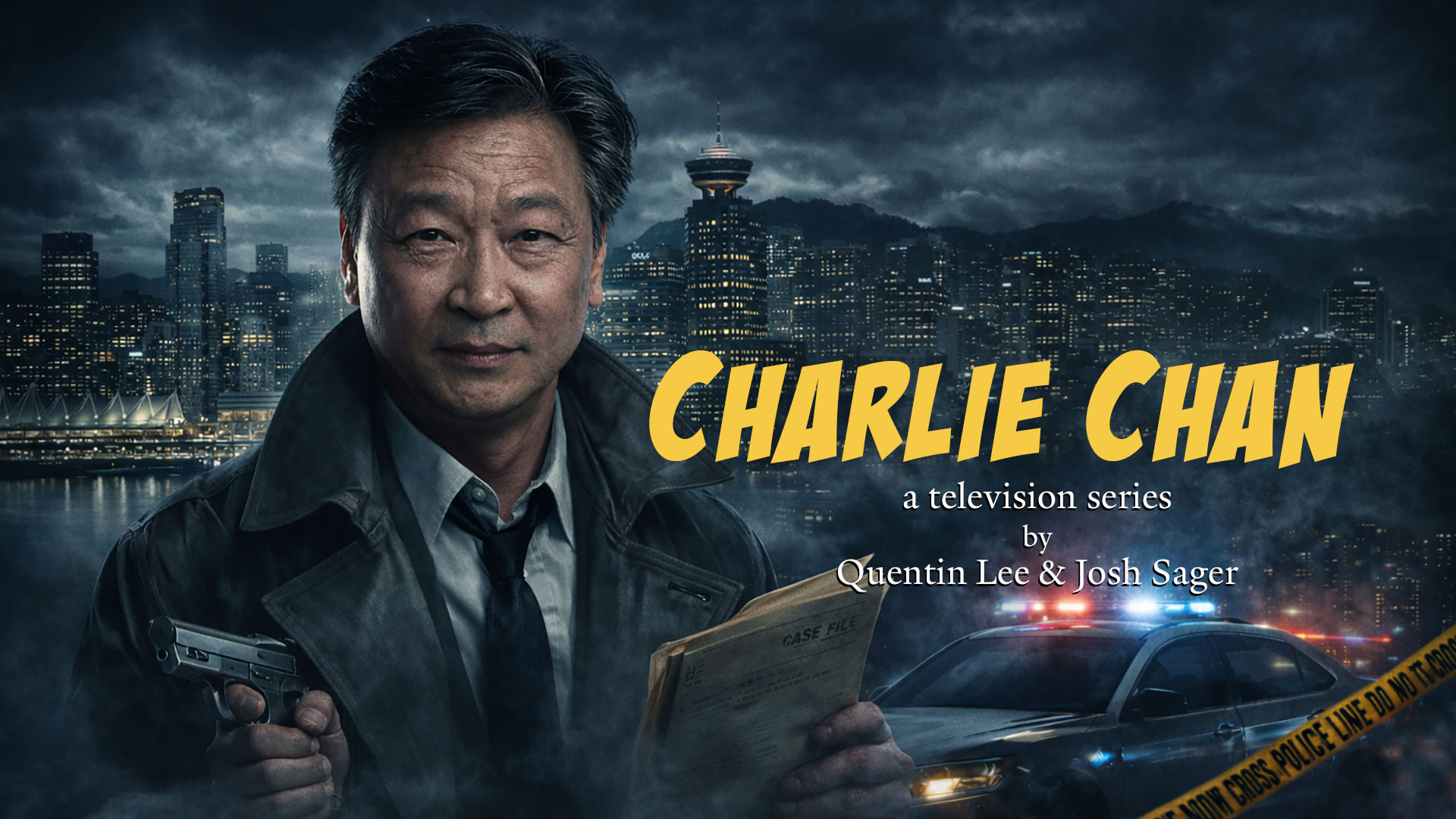
Most recently, you’re co-creating Charlie Chan with Canadian Screen Award–winning showrunner Quentin Lee. Can you tell us about the series and your collaboration with Quentin?
JS: Quentin and I saw an opportunity to reimagine the Charlie Chan IP—which is now in the public domain—for a global, modern audience. We are re-envisioning the character as a Chinese Canadian detective who, after becoming frustrated with the mainstream police force in Vancouver, retires to open a private agency serving local underdogs. While there is plenty of intrigue and “big gang” underworld stakes, the heart of the show is the ripe emotional landscape of his personal life. We’re exploring his efforts to reconnect with an estranged adult daughter and his close relationship with his queer grandson, which creates a rich, character-driven tension that elevates it beyond a standard procedural.
Why are you passionate about character-driven procedurals?
JS: I’ve always been drawn to the procedural genre because of its unique ability to combine consistent suspense with deep character development. As a viewer, I love the “comfort” of spending time with characters who eventually feel like friends or a surrogate family. Whether it’s a traditional family unit or a workplace that functions as one, these relationships are the real hook. I’m thrilled that procedurals are having a prestige moment right now with shows like Poker Face or High Potential, proving that you can offer the audience the intrigue they tune in for while delivering high-level, character-focused storytelling.
I understand you’re also collaborating with International Emmy®–winning showrunner Roland Moore on The British Detective. Can you tell us more about that project?
JS: I recently had the pleasure of catching up with Roland and Quentin at the Series Mania conference in Lille, France, to discuss this project. Roland, who is a brilliant writer, created this intriguing concept about a faded British aristocrat who loses his fortune and relocates to Victoria, Canada, to be near family. The series follows him as he teams up with a local cop to solve crimes using a very specific “Sherlockian” level of deduction. It’s a wonderful genre piece that blends Roland’s sharp British wit with an authentic Canadian perspective.
What is another series you’re currently working on that excites you?
JS: I am currently developing a light comedic procedural called Hart & Stone, which is built around a character a strong core contradiction. The lead, Serafina Stone, is a true crime podcaster investigating cold cases who also happens to suffer from narcolepsy. This creates incredible physical comedy and slapstick opportunities, but it’s all rooted in the truth of the condition. I’ve done extensive research into the obstacles narcoleptics face in their professional lives, and using that as a hurdle for a detective makes for a very unique, character-driven investigator story.
You can follow Josh via Facebook and Instagram.

