
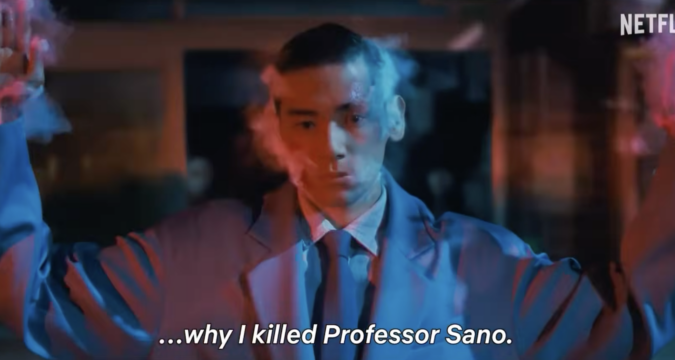
At first glance, Human Vapor sounds like a classic 1960s B-movie premise—and it is, an adaptation of the Japanese film of the same name about a mild-mannered man who transforms into a gaseous super-criminal to terrify Tokyo. However, Netflix’s reboot expands the concept, story, and characters into an eight-part cinematic series that, in my book, is the most compelling, original, and well-made sci-fi mystery horror show of the past two decades. What begins as a sci-fi mystery thriller about a suspected superpowered serial killer evolves into a cinematic epic that amusingly converges superhero lore, government conspiracies, yakuza intrigue, and alien life. Ultimately, Human Vapor maximizes the American dramatic television format while paying whimsical tribute to Japanese pop culture that originated it.
The series’ dramatic engine runs on the unexpected, deeply felt chemistry between three masterfully cast anchors: the cop, the journalist, and the Human Vapor. But the impeccable curation of talent doesn’t stop with the marquee names. Even the briefest bit parts pop with distinct personality—most notably Kaho and Fujita, a hilariously morbid brother-sister horror-streaming duo who effortlessly hijack every scene they’re in, providing a vital blast of comic relief that beautifully offsets the show’s pitch-black narrative undercurrents.
The rich, sprawling architecture of the series’ storytelling could never be contained within the narrow confines of a feature film; instead, the creators of Human Vapor masterfully exploit the television format to deliver prestige, cinematic scope. This triumph underscores why Netflix consistently outperforms Disney in localized content creation. Whether deploying Squid Game or Human Vapor, Netflix honors, rather than flattens, the specific pop-cultural lineage and historical landscape of the host country. By operating as a financial engine rather than an ideological supervisor, the studio refuses to impose American cultural hegemony on its global investments—a refreshing antithesis to Disney’s relentless impulse to “Disneyfy” and homogenize non-Western markets.
You’re welcome to disagree, but I’ll shut up now and just let you enjoy the show—which I absolute devoured in a 24-hour binge.