By Matthew William Knowles
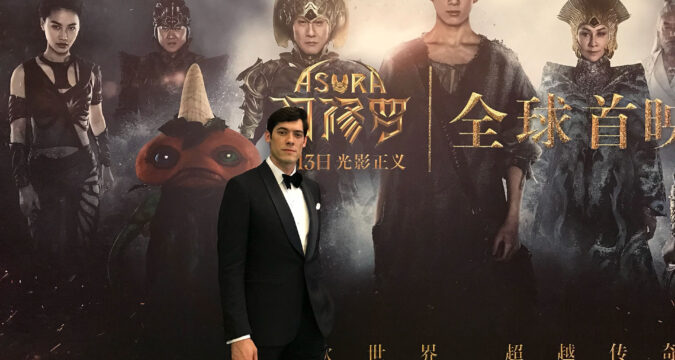
There I was onstage in Beijing, swinging an axe in full costume at the press night for Asura—the $100 million Chinese fantasy epic that was supposed to change my life. In front of me, the Chinese actors sat in plain clothes in oversized chairs while journalists swarmed them with questions. Professionals. Meanwhile, I was the performing monkey. The white guy in the warrior outfit. The prop.
My journalist friend had to physically pull me into interview rooms because the producers hadn’t arranged for me to speak to the press. “He’s one of the leads,” my friend insisted, acting as my impromptu manager. The journalists looked confused. Was I?
I’d flown myself to Beijing for the premiere and bought my own ticket back to London, where I was studying at RADA—the Royal Academy of Dramatic Art. The final box I needed to check before Hollywood would take me seriously. My head tutor had threatened to recommend my expulsion if I missed class for my own premiere. But I had to go. This was my one shot. My entire plan depended on it.
The plan was perfect: graduate from RADA just as Asura opened in China. Walk back into Hollywood with the biggest film in Chinese cinema as my vehicle and classical training under my belt. No more excuses. No more “famous in China doesn’t mean anything here.” I’d have everything. I knew the plan was risky. But I wasn’t chasing fame. I was chasing something I could be proud of.
The Dream
Six months earlier, I was the American face of U.S.–China film collaboration. Producers were calling. I met with Adam Goodman, the former president of motion pictures at Paramount and the new head of LeVision. Afterward, a friend who worked downstairs in the office told me, “Adam doesn’t meet with actors. The only other actor I’ve ever seen him meet with was Tom Cruise.” My managers at 3 Arts were packaging me with John Cena, pitching me for Fast & Furious, and setting up meetings with Legendary about Godzilla or Dune.
Everyone in L.A. wanted that China money, and I was the bridge. The first non-Asian graduate of Beijing Film Academy. A lead in a Chinese blockbuster. A fluent Mandarin speaker. I was the guy who’d done the impossible.
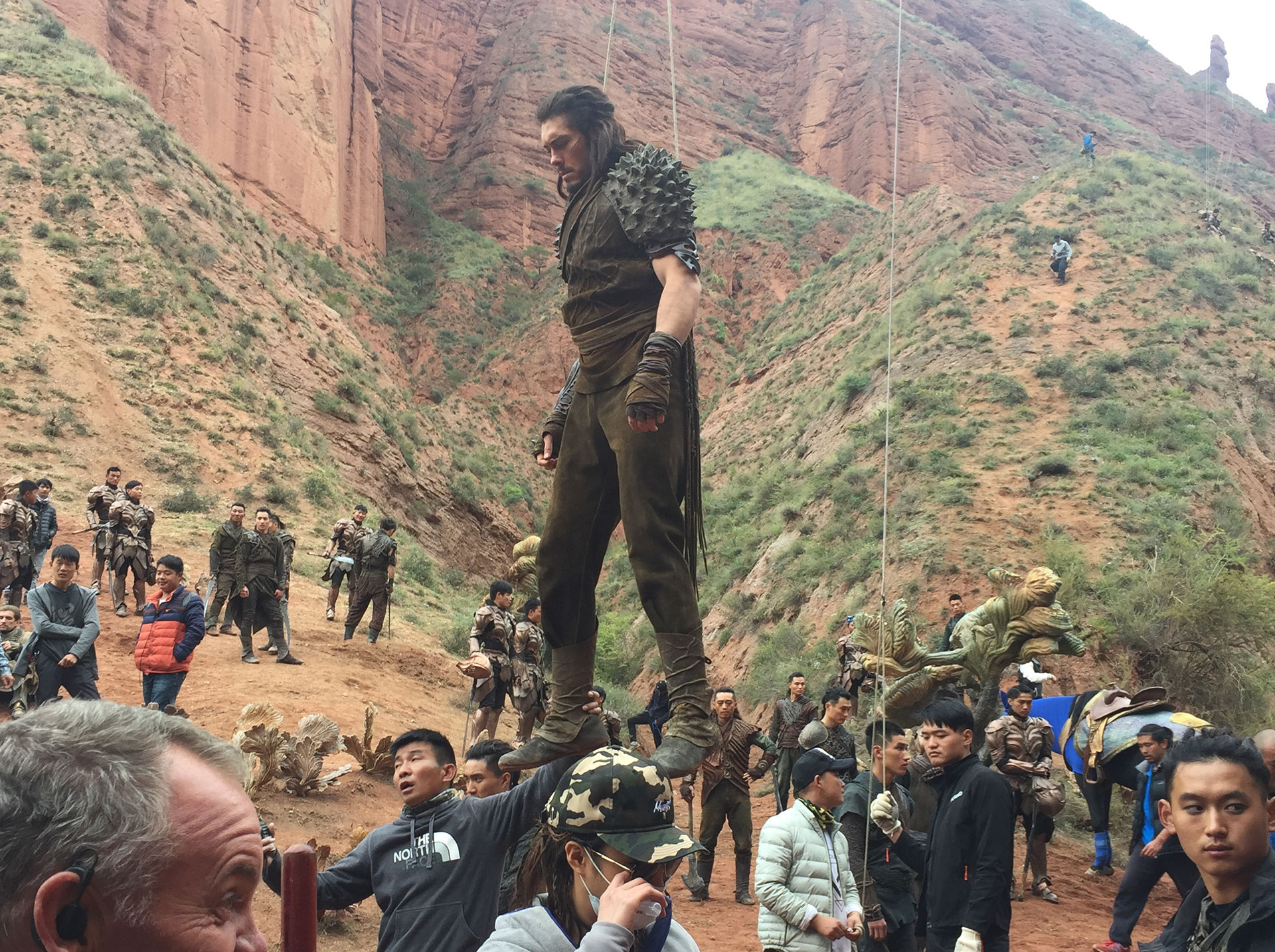
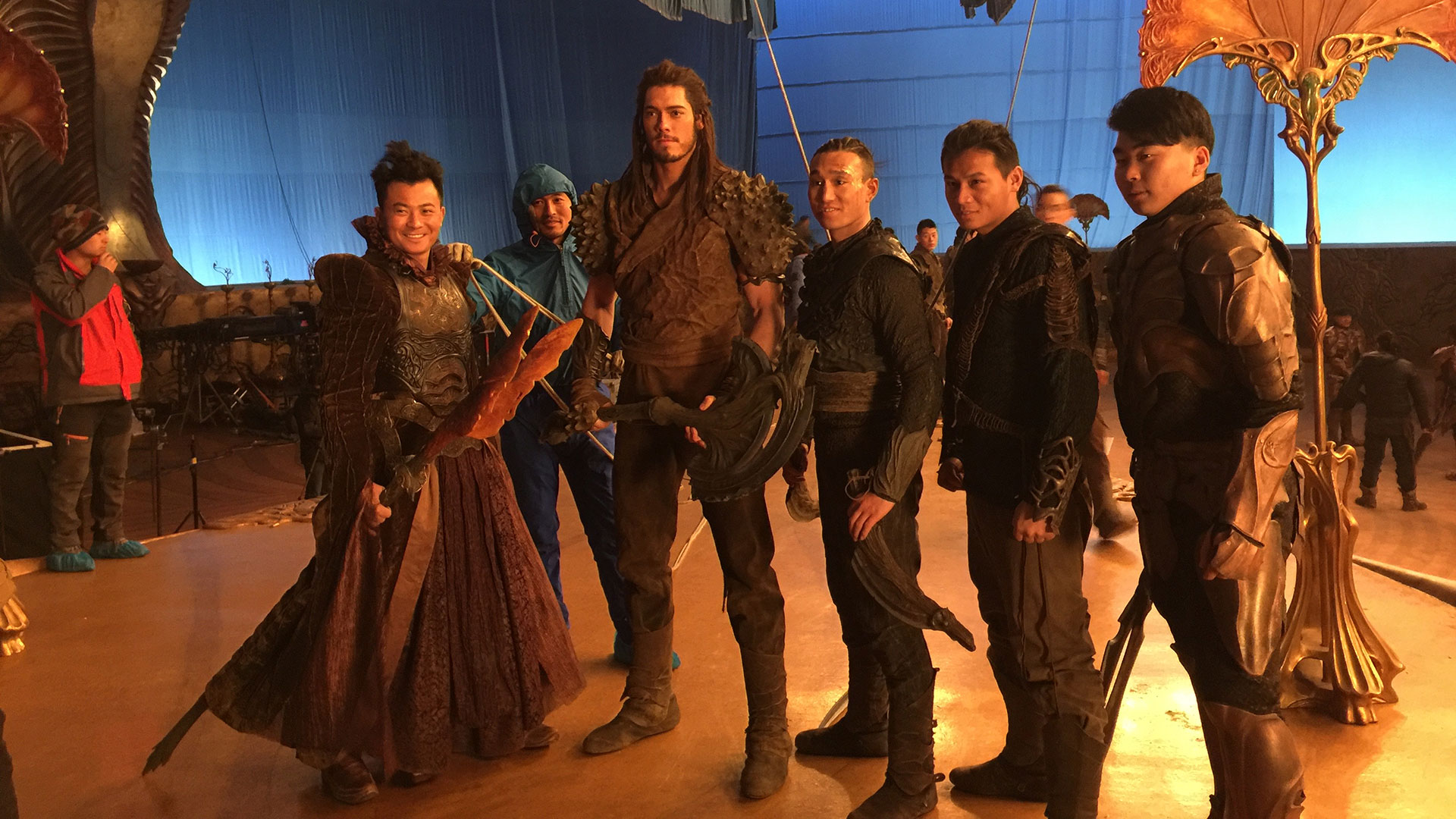
But filming Asura had changed something in me. We trained and shot for nearly a year—more than 180 filming days, with fifteen-hour days on set. I spent hours alone in my tent every day, devouring Larry Moss’s The Intent to Live. I read every play he mentioned. Every novel. Listened to every song, watched every movie. I lay on the ground in costume and repeated voice exercises from Kristin Linklater’s Freeing the Natural Voice. Then I’d go back on set, and they’d have me stand there for hours just to face the camera and turn left.
I wanted more than that.
My friend Archie Kao told me about a famous actor he knew—someone who’d done huge films and had real success—who secretly didn’t think he was a good actor. That terrified me. I didn’t just want fame. I wasn’t even sure I wanted fame at all. But I knew I wanted to be a craftsman. I wanted to be proud of my work. I wanted to be a true actor, not just a prop in costume.
That meant RADA.
My managers thought I was crazy. “You have momentum NOW,” they said. But I knew the truth: I wasn’t good enough yet. I’d blown too many auditions. L.A. saw my China experience as minor-league stuff. People told me all the time: “You’re famous in China? My friend was famous in Italy—or Croatia, or wherever—and couldn’t book anything here.” Then they’d burst out laughing. They didn’t even realize they were insulting me. It felt like people in L.A. wanted me to fail, like they were rooting for it. I needed the craft. I needed validation. I needed RADA on my résumé so that when Asura came out, there would be no excuses left.
Everyone in class thought I was rich. I was burning through money I’d borrowed from a friend in China to pay for RADA. I took the money I’d saved for a down payment on a house and invested it in myself instead—paid my publicist, flew myself to Cannes when our producers canceled our premiere there.
At Cannes, I carried a magazine featuring Asura on its cover under my arm like a trophy. We were on the covers of The Hollywood Reporter and Variety. When people asked why I was there, I’d pull it out. “My film.” Patrick Brzeski from The Hollywood Reporter recognized me and pulled me into parties.
But the whole thing was precarious. And there were signs.
The Cracks
At RADA, I was spinning out. I went to the grocery store and had to sit down on the floor in an aisle, my head spinning with anxiety. I was using the free counseling the school offered students. I was deathly afraid my fragile house of cards would come tumbling down.
The Cannes cancellation was the first crack. Our producers said it wasn’t worth the $2 million investment; our lead actor couldn’t attend. But I was a cheap flight away. So I went anyway.
My Chinese friends hated the film before they even saw it. “We hope this film fails. Sorry, Matt, but your producer acts like he’s better than everyone. And everyone here knows: if you stick your head up, they chop it off.” At press night, our producer stood up and told the journalists he’d made a film with Hollywood-level visual effects, far surpassing those of any Chinese film in history.
At RADA, I was the guy who already had what everyone else was grinding for. An agent. Credits. A $100 million film about to open. One undergrad found out I had representation at ITG and said, “Why are you even still studying? We’re here to GET an agent.”
I can understand why some of my classmates were cold to me. I was a tall, white American guy who’d gotten opportunities in China partly because I fit the Hollywood leading-man mold they wanted to replicate for their international co-productions and local-language productions. My face had been my passport. My classmates saw me as someone who’d simply been handed things they dreamed of working to achieve. They saw me flying to Beijing for premieres. They saw the apartment across from the school. What they didn’t see was the borrowed money, the years spent learning Mandarin, the overseas work far from family—watching my brothers grow up through Skype videos—or the grocery-store panic attacks.
To my RADA classmates, I had everything. To the Chinese producers, I was a prop—a white face to put on the poster. To myself, I was falling apart.
The press tour ahead of the release felt stilted. There wasn’t much advertising. How would people know about the film if the producers didn’t invest in marketing? I heard whispers that the visual effects budget had been slashed, that we’d only been saved by our VFX supervisor, who’d somehow delivered $150 million worth of effects on a $17 million budget.
I worried I’d be exposed as a fraud. The press positioned me as one of the leads of Asura. But I knew the truth: the Chinese producers saw me as decoration. The performance. Always the performance.
The RADA tutor’s threat hung over me: miss class again and face expulsion. But I had to go to Beijing. The timing worked out—barely—and I flew there during our three-day break.
The Premiere
The press night arrived. I took a taxi to the venue and saw the cast and crew lined up, waiting for Bentleys to ferry them to the premiere—producers, stars, their families. No one had told me where to go. I walked over and joined the line. Nobody spoke to me. Nobody looked at me. It felt like I was in the way, like I shouldn’t be there at all.
I’d bought my own ticket to Beijing. They hadn’t wanted me there.
At the theater, I stood onstage in full costume—leather battle armor, axe in hand—while the Chinese actors sat in plain clothes in oversized chairs. Journalists swarmed them with questions. I was the performing monkey. The white guy in the warrior outfit. The prop they wheeled out for photos.
My journalist friend had to pull me into interview rooms. “He’s one of the leads,” he kept insisting to confused journalists. The producers hadn’t arranged for me to speak to anyone.
The premiere happened. The film opened.
Then it was pulled.
Three days later. Gone from theaters.
Scandalous.
The Collapse
I was back at RADA when the news hit. I tried to process it. Tried to explain it to one of my classmates. I saw his eyes glaze over. He couldn’t understand. He thought I was complaining about being the luckiest guy in the world.
My entire career was a house of cards. Built up in the press, just like our film. And it all came crashing down so quickly.
Everything I’d planned—the timing of my RADA graduation, the momentum in L.A., the meetings with producers, the bridge between Hollywood and China—depended on Asura becoming the biggest film in China.
And it was gone.
I’d borrowed money while everyone thought I was rich. Gone against my managers’ advice. Risked expulsion from RADA. Bet everything on myself.
And for what?
I sat in London, trying to focus on Brecht and Grotowski and Meyerhold while my career imploded 5,000 miles away. The trade war between the U.S. and China was heating up. The bridge I’d built my entire career on was burning from both ends.
I’d made every choice that led me here. The debt. The gamble. Going against my managers. Nobody forced me. I thought I was building a bridge between two film industries. I was just performing—for L.A., for China, for RADA, for everyone.
I wasn’t the lead. I was the token. The American face of a doomed experiment in U.S.–China collaboration.
The dancing monkey.
And nobody was clapping anymore.
About the author: Matthew William Knowles is an actor and writer from South Carolina. He was the first non-Asian acting graduate of Beijing Film Academy and starred in China’s first $100M film before it disappeared from theaters. He’s based in Los Angeles.