
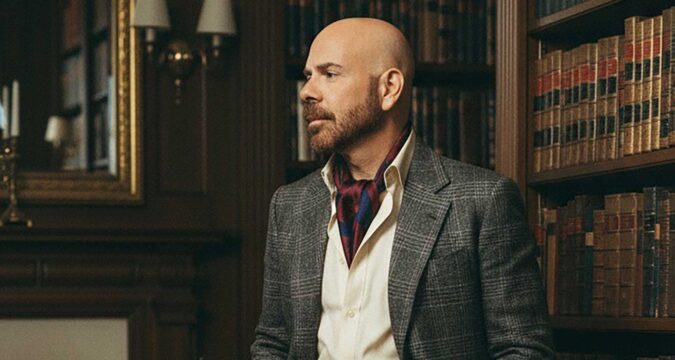
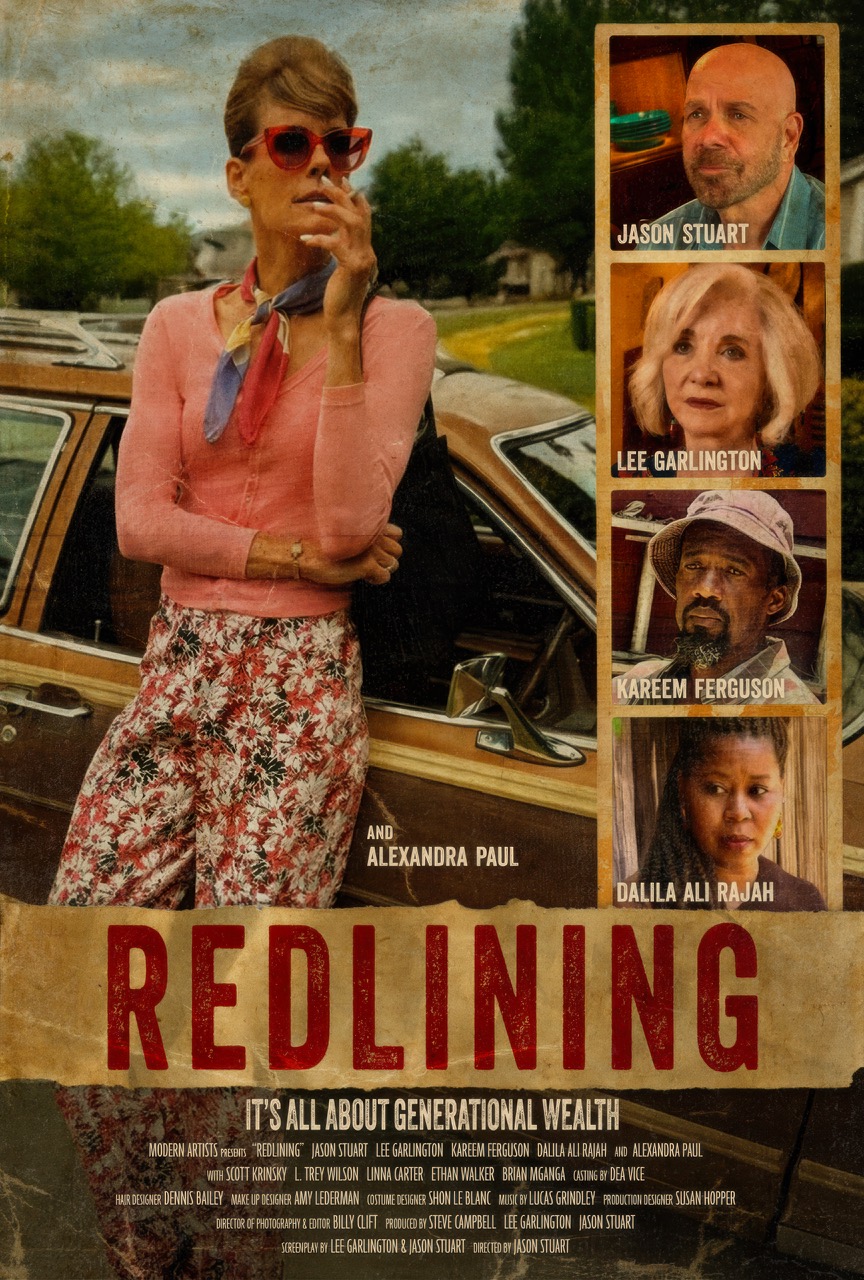
Veteran actor and comedian Jason Stuart shared with me the final cut of his short film, Redlining, which he wrote, directed, and produced. Exploring race and LGBTQ+ identity with wit and bite, Redlining is a compact gem that truly sparkles—and one you’re likely to encounter on the festival circuit at upcoming LGBTQ+ film festivals. I took the opportunity to sit down with Stuart to discuss the film and catch up on what’s next for him.
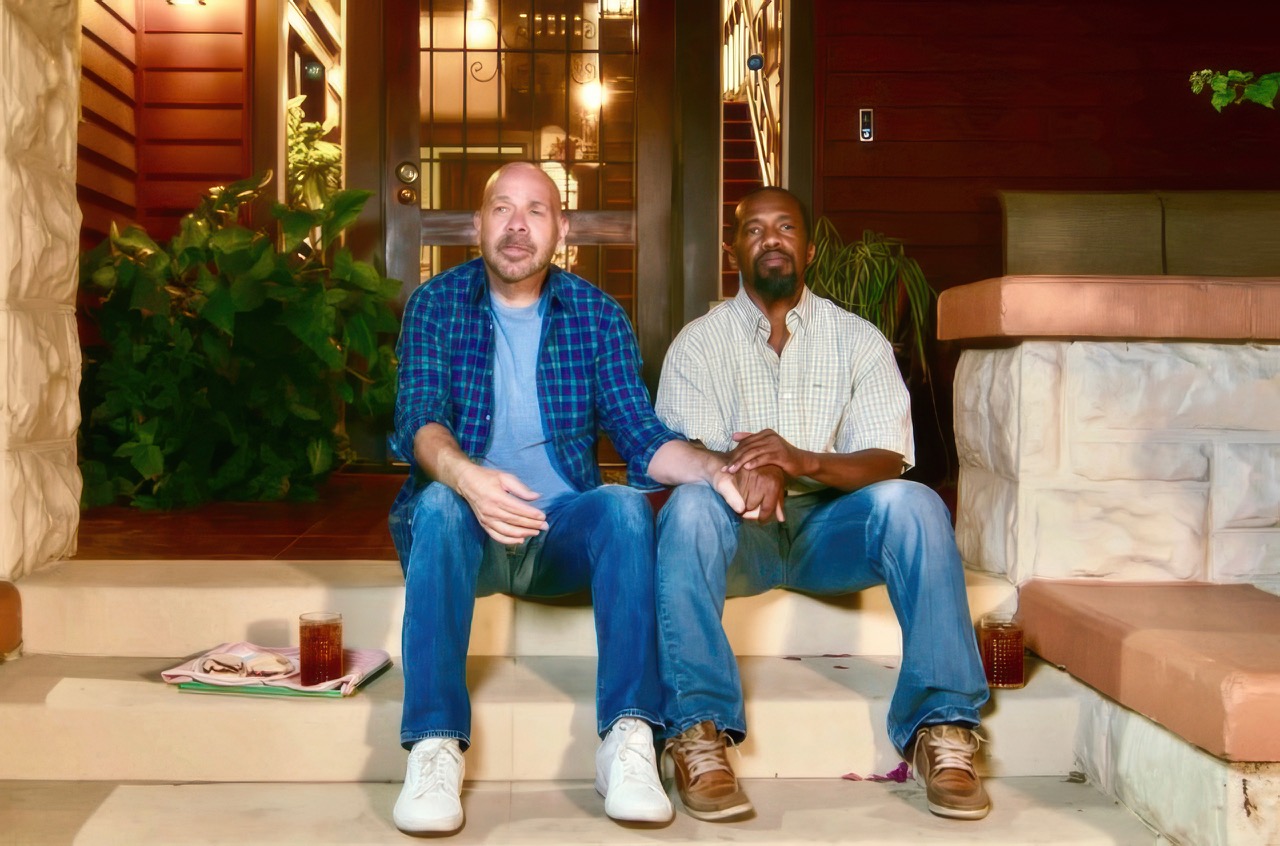
Tell us about your latest short film Redlining that you produced and directed. What inspired you to write the short and how did you get it made?
JS: Look, Redlining came from a very personal place for me. I’ve been out for 33 years. I came out publicly in 1993, which was not an easy time to do that in Hollywood and I’ve always used my comedy and my work to shed a light on injustice.
This short is about discrimination in housing, but it’s really about all forms of discrimination. The term “redlining” historically refers to banks literally drawing red lines on maps around neighborhoods where they wouldn’t give loans, usually Black neighborhoods, LGBTQ and Jewish neighborhoods OUT. And I thought, “This is still happening.” Maybe not with actual red lines anymore, but is alive and well.
Getting it made? Nothing in this business is easy, especially when you’re an openly gay actor & comedian over 50! But I’ve built relationships over my 50 years in this industry. I called in favors, I pitched the vision, I found people who believed in the message. You find collaborators who I’ve worked with before, who understand that art should say something important, not just entertain.
This film is about standing up and saying “No more red lines.” We ALL deserve a seat at the table. Period.
What is one thing you want audience to get out of watching Redlining?
JS: Here’s what I want audiences to take away and this is crucial: We are all more alike than we are different. Every single person watching this film has experienced some form of being shut out, being told they’re not good enough, being marginalized. That’s the connection.
I want people to walk out thinking, “I’m not going to be a bystander anymore. I’m going to stand up.” Because silence? Silence is complicity, honey. We need to erase those red lines all of them and say everyone deserves dignity, respect, and a place to call home.
As you’re veteran actor and comic, what is it like stepping to the other side of the camera and directing? Will you direct more and why?
JS: Directing is exhilarating and scary all at once! As an actor, I show up, I do my job, I make my choices. But as a director you’re responsible for everything, including the vision, the performances, the look, the pacing. It’s like conducting an orchestra when you’ve spent your whole life playing one instrument.
But here’s the thing after 50-plus years in this business, I have stories to tell. Stories that matter. Stories about our community, about injustice, about hope. And I realized, if I want these stories told . I need to be behind that camera. I need to be the one saying “This is how we show dignity. This is how we portray real people, not stereotypes.”
Will I direct more? Absolutely. Because representation matters, and who better to tell LGBTQ+ stories, stories about marginalized communities, than someone who’s lived it? I’ve been the punchline, I’ve been discriminated against, I’ve fought to be seen as more than just “the gay actor & comedian.” Now I get to create opportunities for others, to shine a light on us in Hollywood.
As you’re both a veteran actor and stand-up comic, what is the creative difference between acting and doing stand-up comedy? Are both genres complimentary?
JS: Look, acting and stand-up are like two sides of the same coin, they use completely different muscles. In stand-up, it’s just all you, no script to hide behind, no character to blame if the joke does not work. You’re out there raw, vulnerable, connecting directly with the audience in real-time. You live or die by their laughter, and that immediate feedback? It’s like a drug. Acting, on the other hand, is about disappearing into someone else, finding truth in their journey, collaborating with directors and other actors. But here’s the beautiful thing they are complimentary! Stand-up taught me timing, how to read a room, how to be fearless and authentic. And acting taught me depth, nuance, how to find the emotional truth beneath the comedy. When I’m on stage doing stand-up, I use my acting skills to create characters and moments. When I’m acting, I use my comedy chops to find the humor in dramatic situations, because life is funny, even in the darkest moments. They feed each other, and honestly, doing both has made me better at each one.
Likewise, you’re both a compelling dramatic and comedic actor. What in your opinion is the difference between playing a role in drama vs. playing a role in comedy? Are there different strategies you use?
JS: You know, people think comedy and drama are opposites, but I’m telling you, they come from the same place: truth. The biggest mistake actors make is trying to be “funny” or trying to be “serious.” You just play the truth of the moment and let the writing do its job. In comedy, the strategy is actually to play it straight, to believe completely in the reality of the situation no matter how absurd it is, that’s what makes it funny. In drama, you’re mining deeper emotions, sitting in pain or conflict longer, but it’s still about being present and authentic. The real difference? Comedy requires precision timing, it’s almost mathematical, you know? A pause here, a beat there, and suddenly a line that’s funny becomes hilarious or falls flat. Drama gives you more space to breathe, to let moments marinate. But here’s what ties them together: vulnerability. Whether I’m making you laugh or making you cry, I have to be willing to expose myself, to be raw and honest. My years doing stand-up taught me that you can’t fake authenticity. The audience knows.
As a performer, how do you approach performance?
JS: My approach to performance is simple, be present and tell the truth. Whether I’m on stage doing stand-up or acting in a scene in a film or TV show, I’m not thinking about being funny or dramatic. I’m living truthfully in that moment and responding authentically to what’s happening. The best performances aren’t performances at all they’re real human behavior happening under imaginary circumstances. When you try to “act,” the audience sees right through it. When you just being vulnerable, honest, connected.
As awards season is coming up, what is one movie or TV series you enjoyed and why?
JS: Oh man, there’s so much incredible content right now! I’ve been watching The Pitt with Noah Wyle and my friend Katherine LaNasa. It’s intense, real hospital drama that doesn’t pull punches, and as someone who believes in showing authentic human struggle, I appreciate how raw and immediate it feels. And listen, I’m crazy about “Heated Rivalry” finally, a series that centers a gay romance in the sports world without making it the PROBLEM, you know? If it was just about sex I don’t think it would get all this attention. Its the acting of the 4 leads are simple brilliant. Marty Supreme has me excited because anything with Timothée Chalamet who is becoming the new DeNiro has become a happening. Odessa A’zion is the new Gwyneth Paltrow. And I’m thrilled she’s back acting, they are both terrific in the film. The director Josh Safdie is an audacious filmmaker, and if anyone knows him tell him, I’m ready to play any role in his next film! Jessie Buckley in Hamnet is a revelation and has moved the bar so far up in the actors we all need to get back to acting class. One Battle After Another was like a bullet going thru the air the acting the filming and the story was brilliant! Love Leo DiCaprio, Sean Penn, Benicio Del Toro and Teyana Taylor are so good you forget ur watching a film.
What is one project you’re most excited about in the making?
JS: Well, that role has not found me yet….
Follow Jason Stuart on Instagram!