
As a filmmaker and a fan of Japanese media since my childhood in Hong Kong, I haven’t encountered a more compelling and cinematic work from Japan in years—until Netflix’s Straight to Hell, a nine-part cinematic television series now streaming worldwide. As a film student, I’ve studied masters such as Kurosawa and Ozu, and I was reintroduced to the glory of Japanese cinema during the first wave of J-horror in the late ’90s, with films like The Ring, The Grudge, and the Tomie series. After that, there seemed to be a two-decade void—until Straight to Hell, where cinema, television, and the internet converge in a near-perfect union.
Based on the true biographical story of the infamous and controversial psychic Kazuko Hosoki, Straight to Hell chronicles six decades of her life—from her childhood in the post–World War II era to the early 2000s, when she rose to fame as a prominent psychic and media personality. The story unfolds through a series of interviews with a young female journalist who is writing a book about her life.
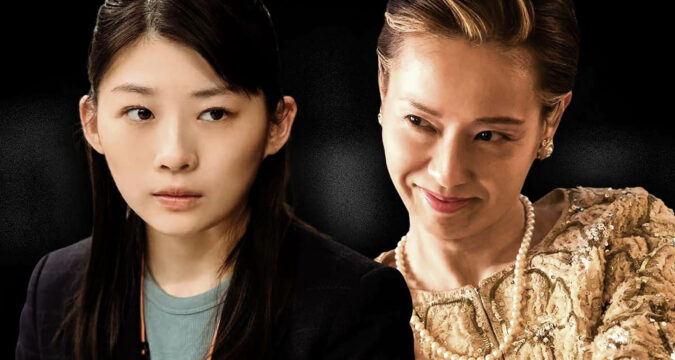
Erika Toda is perfectly cast as the larger-than-life Hosoki, capturing her commanding presence, while Toko Miura portrays the young writer, who gradually finds herself drawn into—and subtly shaped by—Hosoki’s influence.
Japanese cinema has struggled in recent years, until Godzilla Minus One serving as a rare exception. One major reason is the global democratization of VFX technology—once the domain of major Hollywood studios—which has raised audience expectations while remaining difficult for Japanese filmmakers to match due to limited budgets. That gap has persisted until platforms like Netflix stepped in, investing in ambitious projects such as Straight to Hell.
The series’ historical visuals—from the 1940s through the early 2000s—are strikingly beautiful and meticulously crafted. With award-winning makeup, Erika Toda, an actress in her mid-30s, convincingly portrays Hosoki from her late teens to her 60s, delivering a flawless performance in every scene. Toko Miura also gives a compelling performance as the young writer, who struggles to uncover the truth about who Hosoki really is.
The series illuminates the position of women in Japanese society, shaping Hosoki as both a heroine and an antihero. It underscores the structural challenges women have faced—and, in some respects, continue to face—in Japan. For a woman to rise to the level of power and fame achieved by Kazuko Hosoki is no small feat—but the story ultimately asks: at what personal and emotional cost to oneself?
Straight to Hell also explores, through Toko Miura’s character, a writer’s journey and the question of integrity when tasked with documenting the life of a far more successful and influential media personality. Although her character is fictional, she represents the everyman writer—someone who wrestles daily with the choice between pursuing passion and truth, or simply selling out to produce what audiences want to hear and buy.
In Straight to Hell, we also see a remarkable synthesis of cinema, television, and the internet—something that could only emerge in this particular cultural moment. The project functions simultaneously as a film, a television series, and a piece of web/streaming content. Ultimately, the distinction between a film and a series is simply one of storytelling format.