On Facebook, I saw my director friend Yusaku Mizoguchi win Best Director at the City of Angels Film Festival for his feature Sae, a touching drama about a Japanese student who decides to overstay her student visa in the U.S. in order to pursue a life as an artist. As an international student myself, I felt deeply connected to Sae’s perspective and reached out to Yusaku for an interview.
I know Sae is your second feature film. Can you talk about how you put the financing of your second feature together?
YM: My first feature, Mafiosa, was financed by a production company and I was brought in to direct. It was an invaluable experience leading a large-scale production with a sizable cast and crew within a professional studio framework. At the same time, it made me acutely aware of how essential creative control is to my process, particularly when it comes to script development, casting, and assembling the right creative team.
When I moved into my second feature, Sae, I approached the financing very differently. Drawing on relationships and experience I had built over years in the industry, the executive producer and I structured the majority of the budget independently. In addition, a small portion of the budget was raised through both international and Japanese crowdfunding campaigns. This approach allowed me to fully protect the creative vision while applying the production experience I’ve built over many years in the industry.
What inspired you to write Sae? Is it autobiographical in some way?
YM: Sae was inspired by my long-standing fascination with the emotional space between cultures, the moment when someone steps into an unfamiliar world and is forced to redefine who they are. Having lived and worked in the U.S. for many years as a Japanese filmmaker, I’ve closely observed the quiet struggles of first-generation immigrants in the US, the tension between survival and self-expression, and the sacrifices and costs of adapting to an unfamiliar system. Those observations, along with my interest in gender dynamics and how women and Asian people are perceived and defined by society, became the thematic foundation of the film.
The film itself is not autobiographical. As a narrative filmmaker, one of the greatest advantages and pleasures of my work is building a character entirely from scratch and allowing that character to lead the story. That is why the protagonist is a young woman, whose journey is distinct from my own. However, her perspective, emotional landscape, and certain experiences inevitably overlap with my life, not as direct translation, but as emotional truth. Over the years, I’ve learned that this balance between distance and personal resonance is what allows a story to feel authentic while remaining universal.
Luna Fujimoto delivered a great performance as Sae. How did you find your leading lady and what was the working relationship with Luna like?
YM: Luna was introduced to me by a close friend who works in casting in Japan. Although most of her work at the time had been in action films, I was confident from the outset that she was the right choice for Sae. The role required emotional precision and restraint, and I trusted my experience and instincts as a director in making that decision. Since then, her performance in Sae has received two Best Actress nominations, which affirmed that choice.
Our working relationship was built on honesty and mutual trust. Before production began, we spent a great deal of time discussing the character: who Sae is, what motivates her, and why she behaves the way she does throughout the film. By the time we started shooting, the process felt seamless. Even when adjustments were needed on set, they came naturally, because Luna was already fully inhabiting the character of Sae.
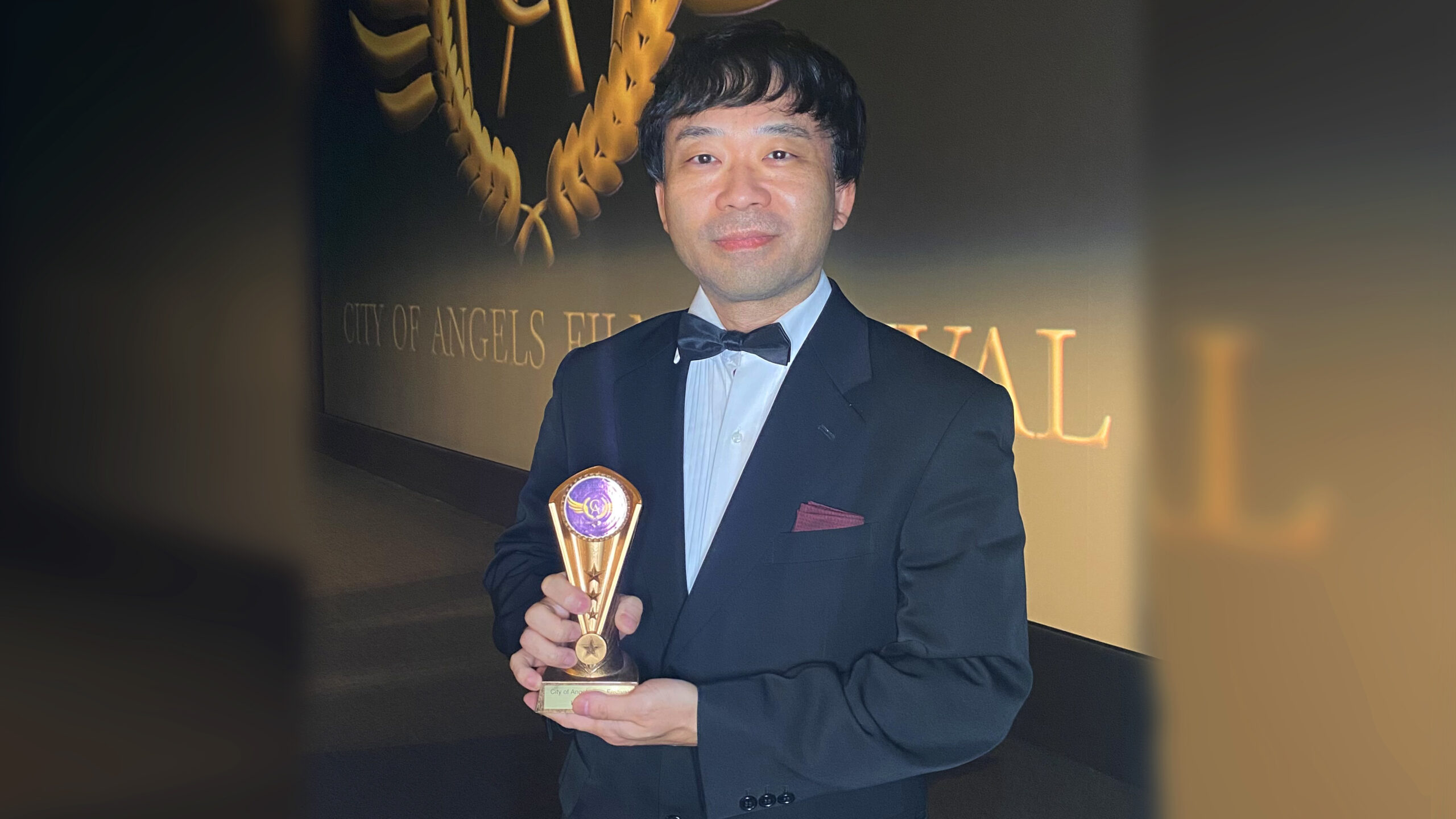
What was the film festival reception of Sae? How did you feel about winning Best Director Award at the City of Angels Film Festival?
YM: The festival reception for Sae has been deeply encouraging. Audiences and programmers have responded strongly to the film’s emotional honesty and its portrayal of cultural displacement, gender dynamics, and quiet resilience. Many of the conversations after screenings centered not on plot, but on recognition, people seeing parts of themselves, or people close to them, reflected on screen. For me, that kind of response is always the most meaningful measure of a film’s impact.
Winning the Best Director Award at the City of Angels Film Festival, alongside nominations for Best Feature Film and Best Actress, was both humbling and affirming. City of Angels is a festival rooted in Los Angeles, a city that is central to Sae’s identity and to my own career, so the recognition felt especially personal. Awards are never the goal, but they do offer a moment to pause and acknowledge the years of experience, risk-taking, and collaboration that went into the film. More than anything, it reinforced my belief in telling intimate, character-driven stories, even when they resist easy categorization.
I was also impressed with the look and feel of the Japanese portion of the film. You didn’t actually shoot it in Japan, right?
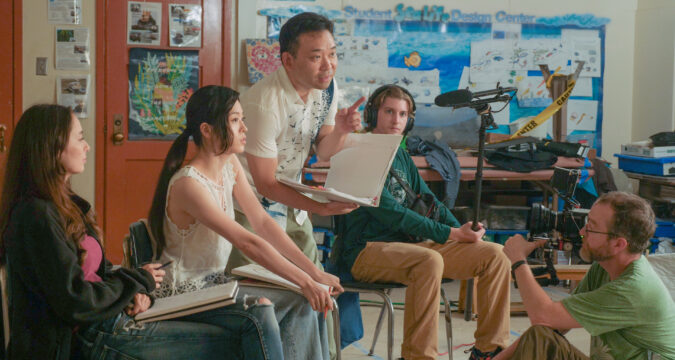
YM: No, we didn’t shoot in Japan. I was born and raised in Tokyo, so I have a very clear internal reference for the environment, rhythm, and emotional texture of those spaces. Rather than relying on geography, my focus was on recreating an authentic psychological atmosphere. The apartment scene in Tokyo, in particular, was carefully designed to reflect Sae’s sense of isolation and stress. To achieve that, I had detailed discussions with my cast, cinematographer, colorist, and sound team early on. We approached the scene holistically, using framing, color temperature, negative space, and subtle sound design to convey emotional distance rather than literal location. It was a very deliberate collaboration, rooted in lived experience and craft rather than simply place.
What’s the most memorable moment for you on making Sae?
YM: Everything about making Sae was memorable, but one moment continues to stay with me. We were chasing a sunset shot by the ocean during magic hour, and the first attempt failed due to technical issues. With the schedule pressing, there was a real temptation to accept what we had and move on. Instead, we returned another day, and nature rewarded us. The sky opened into the exact sunset we had been searching for, something impossible to plan yet instantly recognizable when it appears. Moments like that remind me why I love filmmaking: no matter how meticulously you prepare, there are rare instances when the film gives something back to you. Those are the moments that feel truly alive.
What are you working on now or next?
YM: Right now I’m deep in development on several projects that build on my narrative interests and expanding cinematic scope. My primary focus is adapting and developing a Samurai epic period film, a large-scale co-production between the U.S. and Japan. This project represents the culmination of many years of study, passion for the genre, and experience in both countries’ filmmaking cultures. I’m approaching financiers and assembling a cast that includes well-known actors from both the U.S. and Japan, with the aim of creating a film that resonates globally while honoring the historical and cultural depth of its setting.
In addition to that, I have two other projects in development: a horror film that explores psychological tension through atmospheric storytelling, and another Samurai action film that pushes the genre’s boundaries with realistic Samurai choreography and character depth. Overall, my work is now focused on developing and delivering cinematically ambitious, large-scale films, designed to be produced with major studios or, if not, with mid-sized indie studios and international partners. I am actively searching for and engaging with financiers and producers to bring these projects closer to production.
Based on your experience directing two feature films, what’s one piece of advice you would give to a filmmaker making their first feature?
My biggest advice is to focus on developing your own voice and style as a filmmaker, and not wait for permission. Don’t wait for the perfect budget or for someone to hand you an opportunity, make the film you need to make and put your work into the world. That process is how you prove yourself and begin to build momentum. I also believe in following intuition and constantly challenging yourself. Like Stanley Kubrick, I explore different genres with each film, letting intuition guide me every step of the way. Each project pushes me beyond my comfort zone, sparking growth and keeping creativity alive. Your first feature may not be perfect, but it must exist. Creating it sets you in motion, and that momentum is what ultimately shapes you as a filmmaker.
Stay in touch with Yusaku on Instagram or via Sae’s website!